Sacraments: The Incarnation of Grace
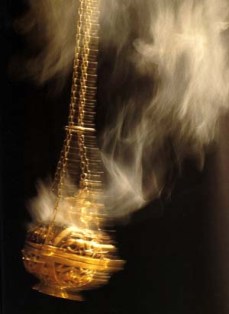
The Book of Common Prayer gives the order for celebrating the sacraments of God. The sacraments are an visible outward sign of an invisible inward grace. The sacraments are the physical manifestation of spiritual realities and the physical enactment of spiritual actions; they are the incarnation of grace.
The sacraments, given to us directly by Christ, allow us to visibly take part in and experience the promises of God. The word “Sacrament” comes from the Latin sacramentum, and was used to refer to a pledge; God has made a pledge concerning these rites of the Christian faith, that he will act in them and through them, according to his word. While the Western church has referred to these rites as Sacraments, the Eastern church has referred to them as the Greek Mystērìon, or, as mysteries; for it is a mystery as to how God accomplishes such spiritual things through these physical events. St. Augustine spoke of the Sacraments as “the visible word”, and the reformers spoke of the sacraments as “signs” of the work of God in the life of a believer. St. Thomas Aquinas, in his Summa Theologiæ, speaks of the sacraments as a mark, an imprint, a character of the life of a disciple:
“God himself has anointed us and set his mark on us. The sacraments of the New Law have two functions: remedying sin and disposing and strengthening our soul to worship God according to the rite of a Christian life. When someone is deputed to a particular task we often give him some special badge or token: In ancient times enlisted soldiers were tattooed on their bodies-their task being a bodily one-and the tattoo was called a character. In the same way the sacraments, which depute men to spiritual functions in the worship of God, imprint on them a spiritual tattoo or character. The seal of divine predestination deputes believers to the reward of future glory, the spiritual seal we call character deputes them for certain acts appropriate to the church in the present life. The character, though invisibly imprinted on the soul, is a sign inasmuch as it is imprinted by a sacrament we can perceive; we know a person is marked with the baptismal character because we have seen him washed with water. In any case, anything that marks out and identifies somebody can be said to imprint him with a character, even if it is not apparent to the census. Christ, for example is said to be the imprint or character of the Father’s own being. The sacraments of the New Law imprint a character because they depute men to worship God according to the rite of the Christian religion” (McDermott, 1989, p.555).
The Book of Common Prayer calls us to recognize the centrality of the sacraments to our life and faith. May we always understand that in these gifts we taste, touch, and feel God's promises, his sacramentum, coming to fruition both physically and spiritually in our life, and that through these acts we are drawn up into the mystērìon of Christ, that we may bear the imprint, or character, of Christ.
Let us pray with St. Basil the Great:
Therefore, O Lord...do unto me according thy great mercy, and grant that these Holy Gifts may be for me unto the healing, purification, enlightenment, protection, salvation and sanctification of my soul and body, and to the expulsion of every evil imagination, sinful deed or work of the Devil. May they move me to reliance on thee and to love thee always, to amend and keep firm my life; and be ever in me to the increase of virtue, to the keeping of the Holy Spirit...for Life Eternal. Amen.
Saturday, July 11, 2009

Thursday, July 2, 2009
The Prayer Book: Part VII
The Liturgy: Divine Drama
In the liturgy (or "service") of the church, we are taken up into an event greater than ourselves, and we express the worship of the church throughout the ages. We witness the enactment of the heavenly worship of Christ, as the saints of God surround the throne of the Lamb. We see the action of the mediation of Christ in the Priest. We see the elevation of the cross in the procession. We see the glory of God in the vestments. We see the hope of the world in the elevated book of the gospels. We find our life within the Body and Blood of Christ at the Eucharist. We join the heavenly choir of angels in praise to our God. The liturgy elevates us, that we may encounter the presence of God, being enveloped in the heavenly worship of Christ. In it we experience fellowship not only with one another, but with the saints of God throughout time who have worshipped according to this same pattern, and with the saints of God in heaven, who are now worshipping according to this same pattern. It is the worship of the church throughout the ages - indeed, wherever you find the early church in the second century, whether in Jerusalem, or Rome, or Alexandria, you find this same pattern of worship. Most importantly, the liturgy is all about experiencing Jesus Christ through the Holy Spirit in the glory of God the Father. We "Lift High the Cross" and give adoration to the Lamb of God. Praise God for the liturgy, and praise Christ through the liturgy. Lift up your hearts...
In the liturgy (or "service") of the church, we are taken up into an event greater than ourselves, and we express the worship of the church throughout the ages. We witness the enactment of the heavenly worship of Christ, as the saints of God surround the throne of the Lamb. We see the action of the mediation of Christ in the Priest. We see the elevation of the cross in the procession. We see the glory of God in the vestments. We see the hope of the world in the elevated book of the gospels. We find our life within the Body and Blood of Christ at the Eucharist. We join the heavenly choir of angels in praise to our God. The liturgy elevates us, that we may encounter the presence of God, being enveloped in the heavenly worship of Christ. In it we experience fellowship not only with one another, but with the saints of God throughout time who have worshipped according to this same pattern, and with the saints of God in heaven, who are now worshipping according to this same pattern. It is the worship of the church throughout the ages - indeed, wherever you find the early church in the second century, whether in Jerusalem, or Rome, or Alexandria, you find this same pattern of worship. Most importantly, the liturgy is all about experiencing Jesus Christ through the Holy Spirit in the glory of God the Father. We "Lift High the Cross" and give adoration to the Lamb of God. Praise God for the liturgy, and praise Christ through the liturgy. Lift up your hearts...
Wednesday, June 17, 2009
The Prayer Book: Part VI
Holy Days: Feasts & Fasts
The Prayer Book also gives us a calendar of Holy Days that includes both Feasts and Fasts that celebrate great saints and commemorate holy occasions. In living out the Holy Days and celebrating the Feasts and Fasts of the church, the Christian again learns to live out the life of Christ and experience communal life and worship. However, the Christian also learns to celebrate and to be inspired by the lives of the hagios of God, the saints throughout the ages. We learn from them how to live the Christian life, and are moved to greater personal devotion to Christ. Each of the saints call out to us: "Follow my example, as I follow the example of Christ" (1 Cor. 11:1).
The Prayer Book also gives us a calendar of Holy Days that includes both Feasts and Fasts that celebrate great saints and commemorate holy occasions. In living out the Holy Days and celebrating the Feasts and Fasts of the church, the Christian again learns to live out the life of Christ and experience communal life and worship. However, the Christian also learns to celebrate and to be inspired by the lives of the hagios of God, the saints throughout the ages. We learn from them how to live the Christian life, and are moved to greater personal devotion to Christ. Each of the saints call out to us: "Follow my example, as I follow the example of Christ" (1 Cor. 11:1).
Sunday, June 14, 2009
The Prayer Book: Part V
The Collects & the Psalter: The Prayers of the Faithful
In the Collects and the Psalter, the Prayer Book teaches us that our prayers should be in communion with the whole people of God. When we pray from the Prayer Book, we pray with the saints throughout the ages, and we learn to set the Kingdom of God and His Church above our personal desires. We learn that when the Body of Christ goes before him in communal prayer there is little else on earth to compare to it. Our prayers are in this way an expression of the One, Holy, Catholic, and Apostolic faith.
In the Collects and the Psalter, the Prayer Book teaches us that our prayers should be in communion with the whole people of God. When we pray from the Prayer Book, we pray with the saints throughout the ages, and we learn to set the Kingdom of God and His Church above our personal desires. We learn that when the Body of Christ goes before him in communal prayer there is little else on earth to compare to it. Our prayers are in this way an expression of the One, Holy, Catholic, and Apostolic faith.
Wednesday, June 10, 2009
The Prayer Book: Part IV
The Daily Office: Integrating the Faith
In The Daily Office, the Prayer Book teaches us to integrate the faith into our lives. We become a people of prayer, a people seeking God. We follow the same pattern of daily life, and we learn what it is to experience God through daily obedience. We live the church year daily both personally and communally, and our lives are set on a common path to God. We also learn to live our daily life in view of the pattern of Christian worship. We confess our sins to God, we praise him for forgiveness, we remember his works, we bring our petitions before him, we pray as the Savior taught us. The value of daily prayer cannot be overstated, and the wisdom and power of communal prayer cannot be adequately expressed.
In The Daily Office, the Prayer Book teaches us to integrate the faith into our lives. We become a people of prayer, a people seeking God. We follow the same pattern of daily life, and we learn what it is to experience God through daily obedience. We live the church year daily both personally and communally, and our lives are set on a common path to God. We also learn to live our daily life in view of the pattern of Christian worship. We confess our sins to God, we praise him for forgiveness, we remember his works, we bring our petitions before him, we pray as the Savior taught us. The value of daily prayer cannot be overstated, and the wisdom and power of communal prayer cannot be adequately expressed.
Monday, June 8, 2009
The Prayer Book: Part III
Sacred Time: The Christian Year
The Book of Common Prayer also sets the Christian life within the experience of the life of Christ. The Christian learns to experience the faith more than momentarily; rather than repentance as a result of a sudden sense of guilt, the Christian learns through the season of Lent that repentance is continual before a Holy God, and learns to view the death of Christ in the light of their own guilt, thus bringing awe of the sacrifice of Christ. Through Easter the Christian learns to live within the light of the resurrection of Christ. In short, the life of the faithful become immersed in experiencing the life of Christ and thus gives a richer understanding of the Gospel as an event in history, the message of God in the Flesh, the Good news Incarnate - Jesus Christ is the Gospel, his life is the message; the liturgical seasons teach us this, and teach us that Christ has made time sacred by entering into it himself.
The Book of Common Prayer also sets the Christian life within the experience of the life of Christ. The Christian learns to experience the faith more than momentarily; rather than repentance as a result of a sudden sense of guilt, the Christian learns through the season of Lent that repentance is continual before a Holy God, and learns to view the death of Christ in the light of their own guilt, thus bringing awe of the sacrifice of Christ. Through Easter the Christian learns to live within the light of the resurrection of Christ. In short, the life of the faithful become immersed in experiencing the life of Christ and thus gives a richer understanding of the Gospel as an event in history, the message of God in the Flesh, the Good news Incarnate - Jesus Christ is the Gospel, his life is the message; the liturgical seasons teach us this, and teach us that Christ has made time sacred by entering into it himself.
Friday, June 5, 2009
The Prayer Book: Part II
The Service of the Church: Living with the Church
The Prayer Book is all about the services of the church. It is the Common Prayer and Common Worship of God's people - together, as the Body of Christ, in Communion with one another. The Prayer Book thus begins by addressing the Service of the Church. In the Service of the Church, the Anglican is reminded that the Christian life is never a solitary life. We have been called to be the Body of Christ, and therefore, the faith is never solitary, and though it is necessarily personal, it is never merely personal. By setting forth the service of the Church and the variations of the service, the Christian is called to live his faith in communion with the Church.
The Prayer Book is all about the services of the church. It is the Common Prayer and Common Worship of God's people - together, as the Body of Christ, in Communion with one another. The Prayer Book thus begins by addressing the Service of the Church. In the Service of the Church, the Anglican is reminded that the Christian life is never a solitary life. We have been called to be the Body of Christ, and therefore, the faith is never solitary, and though it is necessarily personal, it is never merely personal. By setting forth the service of the Church and the variations of the service, the Christian is called to live his faith in communion with the Church.
Wednesday, June 3, 2009
The Prayer Book: A People of Prayer & Worship
If anything has shaped the life of Anglicans and the faith of Anglicanism, it is the Book of Common Prayer. The Book of Common Prayer is a text that expresses the faith of the Church. It gives the Anglican Church much of its identity, and has made them a people of prayer and worship. Anglicanism is the embodiment of lex orandi, lex credendi ("the law of prayer is the law of belief"), for as we pray, so also we believe. the next several entries of this blog will serve as a brief introduction to some of the elements of the Book of Common Prayer. To check out the Book of Common Prayer, see the link to the right or go to: www.bcponline.org
Monday, June 1, 2009
One, Holy, Catholic, Apostolic
One, Holy, Catholic, Apostolic
The Anglican Church is a part of the One, Holy, Catholic, and Apostolic Church. There can be no question that the Ekklesia Anglicana is a continuation of the one true faith; not a new church and not merely a reformation church, but a true expression of the early church.
One. The Anglican Church is a member of the one true church of God. The Anglican Church is not "one" in the sense that it is part of the one Anglican Communion, but it is one in the sense that it is a part of the one true people of God, a people from throughout that ages that make up the one Body of Christ.
Holy. The Anglican Church is Holy. She is a member of the Body of Christ, and a glorious manifestation of the bride of Christ. She consists of the hagios of God, a people set apart unto himself as holy, "a chosen people, a royal priesthood, a holy nation, a people belonging to God" (1 Pet. 2:9).
Catholic. The Anglican Church is a member of the catholic church (not "catholic" in the Roman Catholic sense, but "catholic" in the literal sense of the term, meaning "universal"). Anglicanism is an expression of the universal faith of the early church: "...quod ubique, quod semper, quod ab omnibus creditum est" (that which is believed always, everywhere, and by all). The church must be, and Anglicanism is, a catholic church; the universal and perpetual expression of the faith by the Body of Christ.
Apostolic. The Anglican Church is Apostolic. Anglicanism maintains both the faith of and the episcopal succession from the Apostles of Christ. The Anglican church can claim both the doctrinal apostolic witness of Protestantism and the episcopal apostolic succession of Roman Catholicism, making it a manifestation of the Apostolic Church in our day.
The Anglican Church is a part of the One, Holy, Catholic, and Apostolic Church. There can be no question that the Ekklesia Anglicana is a continuation of the one true faith; not a new church and not merely a reformation church, but a true expression of the early church.
One. The Anglican Church is a member of the one true church of God. The Anglican Church is not "one" in the sense that it is part of the one Anglican Communion, but it is one in the sense that it is a part of the one true people of God, a people from throughout that ages that make up the one Body of Christ.
Holy. The Anglican Church is Holy. She is a member of the Body of Christ, and a glorious manifestation of the bride of Christ. She consists of the hagios of God, a people set apart unto himself as holy, "a chosen people, a royal priesthood, a holy nation, a people belonging to God" (1 Pet. 2:9).
Catholic. The Anglican Church is a member of the catholic church (not "catholic" in the Roman Catholic sense, but "catholic" in the literal sense of the term, meaning "universal"). Anglicanism is an expression of the universal faith of the early church: "...quod ubique, quod semper, quod ab omnibus creditum est" (that which is believed always, everywhere, and by all). The church must be, and Anglicanism is, a catholic church; the universal and perpetual expression of the faith by the Body of Christ.
Apostolic. The Anglican Church is Apostolic. Anglicanism maintains both the faith of and the episcopal succession from the Apostles of Christ. The Anglican church can claim both the doctrinal apostolic witness of Protestantism and the episcopal apostolic succession of Roman Catholicism, making it a manifestation of the Apostolic Church in our day.
Saturday, May 30, 2009
38 Provinces
Correction:
There are actually 38 Provinces, there are other extra-provincial diocese which make up the complete number of member churches.
There are actually 38 Provinces, there are other extra-provincial diocese which make up the complete number of member churches.
Called to Communion - The Anglican Ideal
The Anglican Communion of Churches
The Anglican Church is a church that is designed for unity. It consists of a communion of churches (34 Provinces, 4 United Churches, and 6 other member churches), each with their own primate as head and comprising the third largest Christian Church in the world (behind Roman Catholics and Eastern Orthodoxy) with more than 80 million members. The church has the historic ministerial structure of deacons, priests, and bishops. So, bishops oversee dioceses and are the symbol of unity as they were in the early church. On the national level the church meets in Synod, with three representative houses: one of laity, one of clergy, one of bishops; the bishops of each diocese must assent to any decision of the Synod for if the decision is to be enacted in that bishop's diocese.
The Instruments of Communion
The Anglican Church has four instruments of communion, which serve to unite the provinces of the Anglican Communion. The instruments of communion are:
1) The Archbishop of Canterbury - the Archbishop of Canterbury is the leader and visible head of the Anglican Communion. Unlike the Pope in Roman Catholicism, he does not have binding authority over the entire communion. Rather, he serves among the other primates as the "first among equals". To be in the Anglican Communion means to be in Communion with the Archbishop of Canterbury, or more accurately, the See of Canterbury.
2) The Lambeth Conference - the Lambeth Conference is held every 10 years upon the invitation of bishops by the Archbishop of Canterbury. The Lambeth Conference typically addresses contemporary doctrinal issues and then issues resolutions for the church.
3) The Anglican Constitutive Council - the Anglican Constitutive Council is a council consisting of laity, clergy, and bishops, with the Archbishop of Canterbury as its president. It meets every two to three years and it seeks to streamline the policies and efforts of the provincial churches within the communion
4) The Primates' Meeting - the Primates' Meeting is a meeting of the provincial primates that occurs every two years to discuss current issues and to pray.
Communion in Truth: Reforming Anglicanism
The Anglican Church is currently undergoing great difficulties in maintaining communion because of the actions of the extremely liberal Episcopal Church - USA, the provincial church of the Anglican Communion in the United States. As a result of the heresies and rejection of orthodoxy within the Episcopal Church, many are leaving the Episcopal Church and the Anglican Communion itself is at risk. As a reaction to the rejection of the Episcopal heresies, conservative Anglican provinces are planting churches in America, and Anglicans in America have started a number of Traditional Anglican Churches that maintain Christian orthodoxy. To maintain communion, the Anglican Church must reform itself, enact discipline on the Episcopal Church-USA, and attain communion in the truth. The orthodox Anglican missions in America are currently uniting in an effort to form a new and orthodox province of the Anglican Church in North America; the Anglican Church in North America (ACNA) is holding its Provincial Assembly in Bedford, Texas from June 22-25, 2009 (www.united-anglicans.org).
The Anglican Church is a church that is designed for unity. It consists of a communion of churches (34 Provinces, 4 United Churches, and 6 other member churches), each with their own primate as head and comprising the third largest Christian Church in the world (behind Roman Catholics and Eastern Orthodoxy) with more than 80 million members. The church has the historic ministerial structure of deacons, priests, and bishops. So, bishops oversee dioceses and are the symbol of unity as they were in the early church. On the national level the church meets in Synod, with three representative houses: one of laity, one of clergy, one of bishops; the bishops of each diocese must assent to any decision of the Synod for if the decision is to be enacted in that bishop's diocese.
The Instruments of Communion
The Anglican Church has four instruments of communion, which serve to unite the provinces of the Anglican Communion. The instruments of communion are:
1) The Archbishop of Canterbury - the Archbishop of Canterbury is the leader and visible head of the Anglican Communion. Unlike the Pope in Roman Catholicism, he does not have binding authority over the entire communion. Rather, he serves among the other primates as the "first among equals". To be in the Anglican Communion means to be in Communion with the Archbishop of Canterbury, or more accurately, the See of Canterbury.
2) The Lambeth Conference - the Lambeth Conference is held every 10 years upon the invitation of bishops by the Archbishop of Canterbury. The Lambeth Conference typically addresses contemporary doctrinal issues and then issues resolutions for the church.
3) The Anglican Constitutive Council - the Anglican Constitutive Council is a council consisting of laity, clergy, and bishops, with the Archbishop of Canterbury as its president. It meets every two to three years and it seeks to streamline the policies and efforts of the provincial churches within the communion
4) The Primates' Meeting - the Primates' Meeting is a meeting of the provincial primates that occurs every two years to discuss current issues and to pray.
Communion in Truth: Reforming Anglicanism
The Anglican Church is currently undergoing great difficulties in maintaining communion because of the actions of the extremely liberal Episcopal Church - USA, the provincial church of the Anglican Communion in the United States. As a result of the heresies and rejection of orthodoxy within the Episcopal Church, many are leaving the Episcopal Church and the Anglican Communion itself is at risk. As a reaction to the rejection of the Episcopal heresies, conservative Anglican provinces are planting churches in America, and Anglicans in America have started a number of Traditional Anglican Churches that maintain Christian orthodoxy. To maintain communion, the Anglican Church must reform itself, enact discipline on the Episcopal Church-USA, and attain communion in the truth. The orthodox Anglican missions in America are currently uniting in an effort to form a new and orthodox province of the Anglican Church in North America; the Anglican Church in North America (ACNA) is holding its Provincial Assembly in Bedford, Texas from June 22-25, 2009 (www.united-anglicans.org).
Scripture, Tradition, Reason - The Scripture, The Sacred, The Spirit
The Anglican Church also recognizes the role of Scripture, Tradition, and Reason within the life of the church. God has given us the Scriptures as Divine revelation of Himself, he has given us the Sacred as sacramental/liturgical manifestation of Christ, and he has given us the Spirit as the illuminator of our reason and sanctifier of our soul. therefore, it is through these three avenues that the Body of Christ matures.
Wednesday, May 27, 2009
The 1,2,3,4,5 of The Anglican Way
The Anglican Way is outlined and explained simply by the 1, 2, 3, 4, 5, of The Anglican Way - Anglicans affirm:
1) One Canon of Holy Scripture
2) Two Testaments - The Old Testament and the New Testament
3) Three Creeds - The Apostles', Nicene, and Athanasian
4) Four Ecumenical Councils - Nicaea, Constantinople, Ephesus, Chalcedon
5) Five Centuries of Church Fathers - The Apostolic Church in worship, discipline, ministry, and mission.
1) One Canon of Holy Scripture
2) Two Testaments - The Old Testament and the New Testament
3) Three Creeds - The Apostles', Nicene, and Athanasian
4) Four Ecumenical Councils - Nicaea, Constantinople, Ephesus, Chalcedon
5) Five Centuries of Church Fathers - The Apostolic Church in worship, discipline, ministry, and mission.
Monday, May 25, 2009
The Via Media
The Anglican Church seeks to be the via media, the "middle way" between Roman Catholicism and Protestantism. Unlike the protestant churches, Anglicanism does not reject doctrines just to separate themselves from Roman Catholicism, not does it embrace others to differentiate itself from others. It does not forsake the ancient church or the Fathers, but seeks to honor all that is holy and good (and there is much that is holy and good) within Roman Catholicism. At the same time, however, the Anglican Church recognized the need for reform during the reformation and responded, making changes deemed necessary for complete faithfulness to the early church. To use an elementary term then, the Anglican church is truly the "best of both worlds", but, most importantly, Anglicanism is the expression of all that is both Evangelical and Apostolic, both Scriptural and Orthodox, both permanent and reformed.
The Anglican Way
The Anglican Way. Ekklesia Anglicana. The Church of England is a manifestation of the Apostolic Faith, and it is the expression of that Apostolic Faith to which I believe God has called me after a two year study of Apostolic Christianity and the early church. This blog will serve as an introduction to the basic elements of The Anglican Way.
Subscribe to:
Posts (Atom)
Kyrios Iesous Christos, Theos-Anthropos

Kyrie Eleison, Christie Eleison
St. Barnabas Anglican Church

Click Here - Visit Our Facebook
The Anglican Church in North America

Restoring American Anglicanism to Orthodoxy
Prayers of the Saints
.jpg)
The Holy Eucharist

The True Body and Blood of Jesus Christ, Our Lord
The Book of Common Prayer

English Standard Version
